

Every nation creates behind remarkable cultural heritage that expresses its history, culture, traditions. The Mongolian people, who once established a powerful empire on a world scale and created a new civilization connecting East and West, have created many unique works of art from ancient times to the present day.
Due to the unique nature of the nomadic way of life, foreign invasions, natural disasters, and the theft and looting of cultural property, many valuable cultural treasures created by generations of skilled artists and talented craftsmen have been lost, damaged, or destroyed. Nevertheless, a considerable number of cultural heritage objects have survived to the present day, providing a rich legacy that can be shared with future generations and with people around the world.
Some of the finest and most valuable of this heritage are preserved in The Fine Arts Zanabazar museum.It is worth noting that the museum’s collections contain many more rare and precious artworks than those currently displayed in the museum halls, with a large number of treasures carefully preserved in the museum’s storage facilities.
The museum was established through efforts initiated in 1965 and officially opened to the public on 23 July 1966, when it welcomed its first visitors and began its operations.
Our museum, which presents and promotes the historical heritage of the nomadic civilization and the priceless masterpieces created by generations of Mongolian artists, opened its doors with just over 300 exhibits. Today, it has developed into a national professional institution dedicated to the promotion, research, preservation, and protection of Mongolian fine arts and nomadic cultural heritage.
In 1989, the museum’s collection of modern artworks was separated and established as an independent institution under the name Mongolian Modern Art Gallery. In 1995, on the occasion of the 360th anniversary of the birth of The First Javzandamba Khutuktu G. Zanabazar, the museum was renamed in honor of this great historical figure-a prominent religious, political, and social leader, as well as a sculptor, linguist, and educator who made outstanding contributions to Mongolian culture and society.
Today, the museum preserves nearly 20,000 objects in its collections and exhibitions, representing a broad span of Mongolian cultural heritage from the prehistoric era (ca. 40,000–10,000 BCE) to the early twentieth century. More than ten exhibition halls, arranged according to chronological and thematic principles, display approximately ten percent of the museum’s collections.
At present, of the approximately 200 artifacts recognized as cultural treasures of exceptional historical and cultural value in Mongolia, nearly 70 are housed in our museum. Visitors can enjoy a wide variety of unique masterpieces, ranging from a bronze sword with an ibex-head handle dating back to around 2000 BCE, deer stones, and ancient rock paintings, to Buddhist paintings (Thangka paintings) created with mineral pigments and colorful earth paints, as well as beautiful silk appliqué artworks. These rare objects reflect the richness and diversity of Mongolia’s cultural heritage.
The museum’s collections include numerous rare and valuable works that exemplify the extraordinary skills of Mongolian smith artists. These objects demonstrate sophisticated traditional techniques such as forging, hammering, rolling, piercing, repoussé, and metal shaping in iron, steel, silver, and other precious metals. Among them are ornate knives, pipe cleaners, saddle and bridle ornaments, ewers, ritual vessels (mon: zaviya), a finely engraved steel knife crafted by the renowned master Yerentei Darhan, silver castings, and incense burners (mon: sangiin boipor) used in Buddhist rituals. These masterpieces, created by artisans of different generations, represent the richness and refinement of Mongolia’s metalworking tradition.
The mission of our museum is to present to both domestic and international audiences the finest and most outstanding masterpieces created by generations of Mongolia’s greatest artists. Through research-based interpretation and scholarly presentation, the museum seeks not only to exhibit these unique and irreplaceable cultural treasures but also to preserve and protect them according to the highest professional standards. In fulfilling this mission, the museum serves as a distinguished national institution dedicated to the preservation and promotion of Mongolia’s artistic and cultural heritage.
Timeline
1965.03.31 – Decree №87 was issued by the Party Committee to establish “Fine Arts Museum”.
1965.04.15
1966.07.23 – The museum welcomed its first visitors.
1989 – Works from the contemporary art wing are set apart to establish the “National Art Gallery”.
1991 – “Theatre Museum” is established from the museum collection.
1995 – The Fine Arts Museum is named after the famed sculptor, enlightenment figure, religious leader and statesman, the First Bogd Jebtsundamba Khutuktu Gombodorjyn Zanabazar to honor the 360th anniversary of his birth.
The First Bogd Zanabazar (1635-1723)
The First Bogd Jebtsundamba Khutuktu, Undur Gegeen (Lofty Brilliance) Zanabazar, was born in the year of wood pig of the eleventh sexagenarian cycle, as grandson of Abadai Khan, a direct descendant of the golden lineage of Chinggis, and son to Tushet khan Gombodorj and queen Khandjamts.
At the age of three, Undur Geghen could recite the praise of Manjushri having no one taught him, and at the age of four could read mantras in both languages of India and Tibet. The name Ishdorj was given to him by Jampaling Nomun khan, which is Zanavajra (in Sanskrit gayan but pronounced zana) but later became Zanabazar.
Soon after, an envoy was sent to Tibet requesting the Dalai Lama and the Panchen Lama for recognition, thus he was identified as the reincarnation of Jebtsun Kunga Nyingpo manifested in Tibet and India since the time of Buddha Shakyamuni. When Zanabazar reached the age of five in 1639, the year of yellow rabbit, he was enthroned as the head of religion at Shiret Tsagaan Lake, what is now Uvukhangai province, becoming the first time the Bogd was appointed from the golden lineage of Chinggis. Upon his enthronement as Bogd, 108 young men were given to him as disciples from Tushet khan, hence began the origin of the Bogd’s great disciples. The urguu (palace-residence) built for him at the beautiful location of Shiren Tsagan Lake, between the great and small Mongol mountains, which became the foundation of the capital today.
.JPG)
Undur Geghen, at the age of five in 1639, received the vow from his guru Lobsangdanzanjamts at Shiret Tsagan Lake. By the time Undur Geghen reached the age of thirteen in 1647, the Baruun Khuree was established.
Upon his visit to Tibet in 1650, to a place known as the Baruun zuu, he met with the Fifth Dalai Lama Ngawang Lobsang Gyatso (1617-1682) and the Panchen Lama Losang Chokyi Gyaltsen (1570-1662). The Panchen Lama gave him the novice vow and the Dalai Lama bestowed him with the Jebtsundamba Khutuktu title and seal.
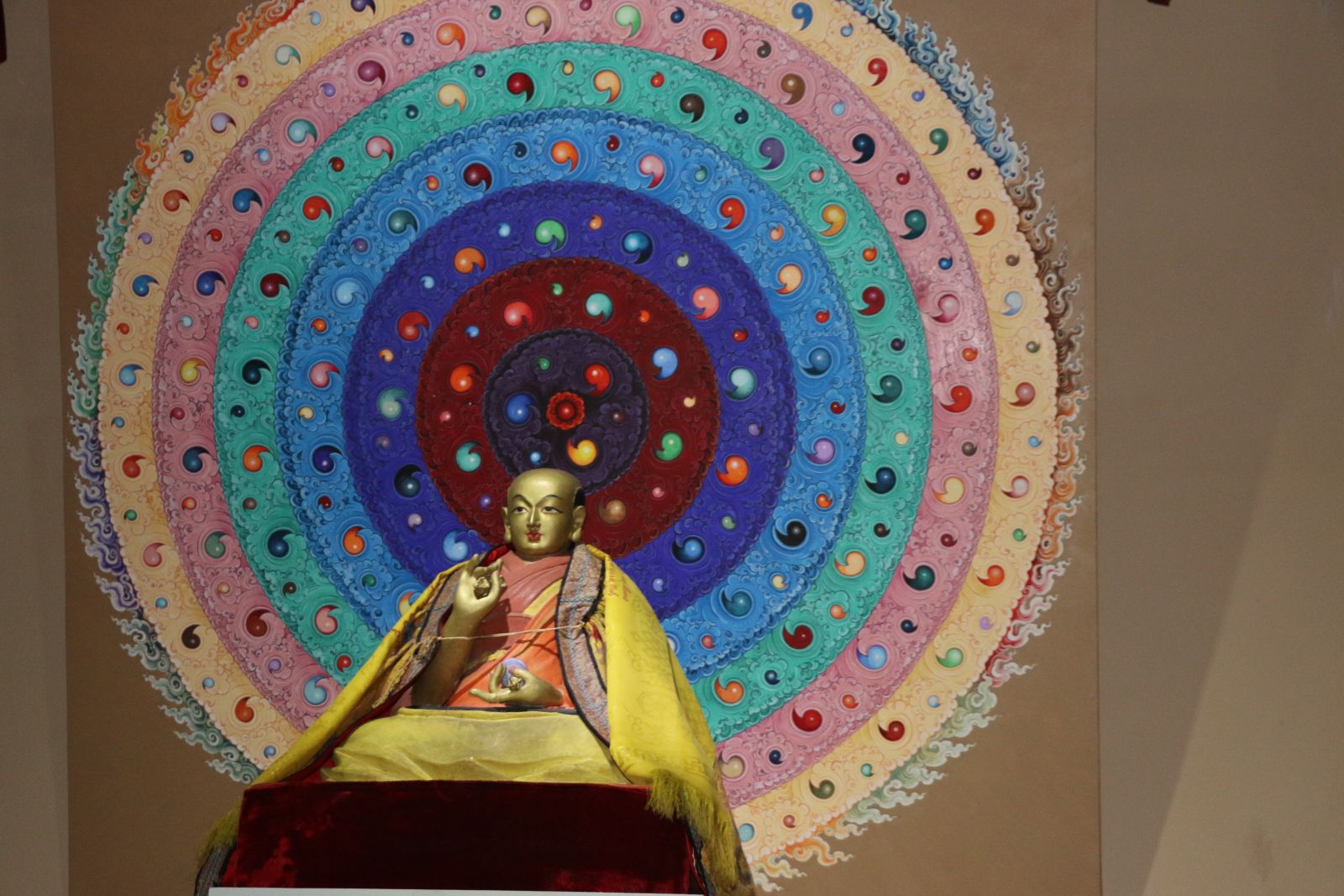
After returning to Mongolia from Baruun zuu, Undur Geghen established the artistic temple at Shivet of Khangai khan, and in 1654, the Ikh Khuree was established. The Khalkha rulers gathered in 1658 at Erdene Zuu and offered a long-life ceremony prayer to Zanabazar. By 1702, the Zuun Khuree was established, where the focus was on the education of the monks there, hence many were sent to the center of knowledge in Tibet, the Gandan, Sera and Tashilhunpo monasteries, to learn the Buddhist teachings thoroughly. Undur Geghen Zanabazar established the great Buddhist tradition in Mongolia and on fourteenth of the first month of the twelfth sexagenarian cycle reached nirvana in 1723, at the age of eighty-nine. Thus it was recounted in the work of Agvantsultemjamts.
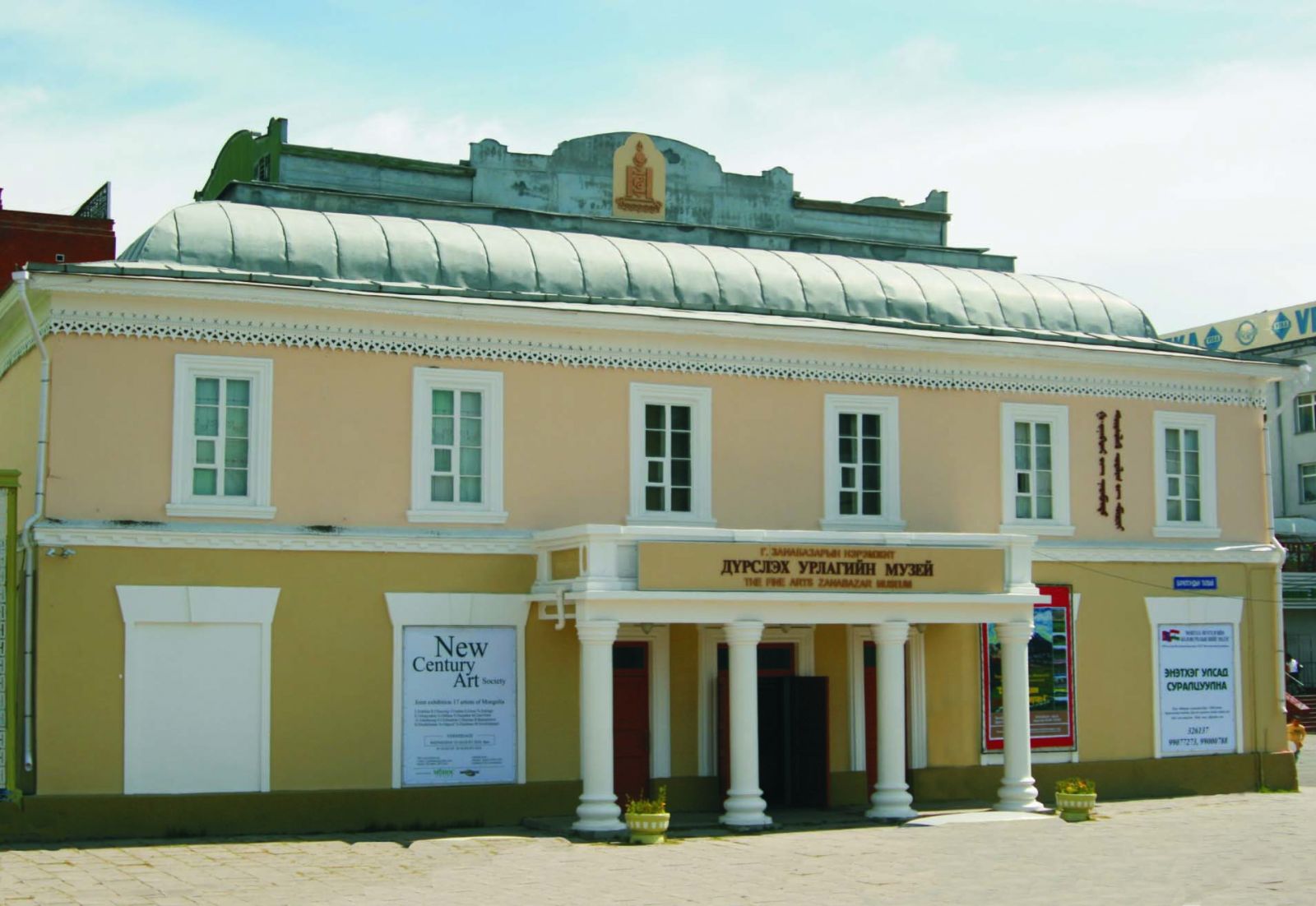
The current building of the Fine Arts Zanabazar Museum was built around 1905 and it was one of the earliest European style buildings, with two floors, to be built in the capital. While the building underwent numerous renovations, the original structure is maintained and is regarded as an important historical architectural site of Ulaanbaatar city.
The building was commissioned by a Russian merchant around 1905 and initially was used for trade purposes. Later in 1920 it housed a Chinese bank, then a Soviet Red army unit in 1921, the State Department Store in 1931. By the year 1961, the Union of Mongolian Artists was located in the building, then later in 1966 the Fine Arts Museum was established in this location.
The main section of the museum building has two levels, whereas the north-eastern wing has three floors. The historic building looks small from the front side, but it is actually stretches 67m long, housing permanent galleries, four collection storage rooms, and the administrative section.
ЮНЕСКО-с санаачилсан "Соёлын өвийг хамгаалах ба музейг хөгжүүлэх" хөтөлбөрт Дүрслэх Урлагийн Музейг хөгжүүлэх төсөл хамрагдсан юм. Хөтөлбөрийн зорилго нь хөгжингүй болон хөгжлийн шилжилтийн үеийг дамжиж байгаа орнуудын соёлын өвийг хамгаалах, музейг хөгжүүлэх, олон улсын ба бүс нутгийн хамтын ажиллагааг өргөжүүлэхэд оршино.
Тус байгууллага "Кабул, Афганистаны музейн сан хөмрөгийг хамгаалах", "Таджикстаны музейн сан хөмрөгийг хамгаалах" зэрэг төслүүдийг Азийн бүсэд хэрэгжүүлж байна.
2004-2007 онд хэрэгжүүлэх "Занабазарын нэрэмжит Дүрслэх Урлагийн Музейг хөгжүүлэх, нүүдэлчдийн соёлын өвийг хамгаалах" төсөл 3 гол ажилбарыг хамарч байна. Үүнд:
БҮРТГЭЛ, КАРТЖУУЛАЛТ- Үзмэрийн хадгалалтын байдлын талаар тайлан бичлэг бүхий бүртгэлийн тогтолцоог олон улсын жишгийн дагуу боловсронгуй болгох. "Object ID"-г ашиглэн үзмэрүүдийг тодорхойлох
ҮЗМЭР ХАМГААЛАЛТ- Үзмэрт нөлөөлөх гэрэл ба дулаан, чийгшилтийн хяналт тогтоох, сан хөмрөгийн байршил, төхөөрөмжийн шинэчлэлт хийх
СУРГАЛТ- Музейн ажилтнуудад зориулан сургалт зохион байгуулах, гадаадад сургах
Тус музейн ажилтнууд ба ЮНЕСКО-н мэргэжилтнүүд хамтран музейн үйл ажиллагааг сайжруулах арга хэмжээг хэрэгжүүлэхээс гадна урлагийн бүтээлүүдийг хамгаалахад олон нийтийг оролцуулахад анхаарлаа хандуулна.
Музейн ажил үйлчилгээний үр дүн нь үзмэр дурсгалаа сайн харж хамгаалах, өргөн олон түмэнд үзмэрээ дэлгэн үзүүлж соёлтой үйлчлэхээр хязгаарлагдахгүй.Байгууллагын дотор гадна орчны тохижилт, аюулгүй ажиллагаа, барилгын өнгө үзэмж, ухаалаг сурталчилгаа, цаг үеийн шуурхай мэдээлэл зэрэг олон хүчин зүйл манай ажлын үр дүнд нөлөөлдөг.
Бид үзэр үйлчилгээнийхээ ажлын бодит үр дүнг дээшлүүлэх, үзэгчийн сэтгэл ханамжийг улам бүр баталгаажуулах чиглэлээр хийж буй ажлын хүрээнд “Гаднах орчин” төслийг 2009 оноос хэргжүүлж байна. Энэ төслийг 3 үе шаттай хэрэгжүүлж байгаа бөгөөд энэ оны төгсгөлд бүрэн хэрэгжүүлж дуусгах юм.
- Музейн барилгын өнгө төрхийг, уламжлалт архитектурыг алдагдуулахгүйгээр шинэчилэн сайжруулах
- Барилгын эргэн тойрны хамгаалалт, техникжисэн хяналтыг иж бүрэн хэрэгжүүлэх
- Дотоод нөөц бололцоогоо ашиглан,байгууллагын орчны эмх цэгц,тав тух, аюулгүй байдлыг хангах 3 үндсэн чиглэлийн ажлыг энэ төслөөр шийдвэрлэж байна.
БСШУЯ-ны шийдвэр гарч, 2011 оноос эхлэн байгууллагын өөрийн өөрийн үйл ажиллагаанаас олсон орлогоо захиран зарцуулах болж байгаа нь төсөл бүрэн хэрэгжих нэг чухал баталгаа болж байна.
Музейн үзмэрийн тайлбарыг боловсронгуй, хөнгөн шуурхай болгох, шинэ техник технологи оруулж ирэх, Монголыг зорин ирсэн гадаадын жуулчдад эх хэлээр нь Монголын түүх, соёл урлагийн тухай эмх цэгцтэй, үнэн зөв мэдээлэл өгөх Монгол орноо дэлхийд сурталчлан таниулах зорилгоор Нидерланд улсын Ханхүү Клаусын Сан /The Prince Claus Fund/-тай 2012 оны 07 дугаар сарын 03-ны өдөр гэрээ байгуулж, “Музейн үзмэрийн Аудио хөтөч” төслийг хэрэгжүүлж эхэлсэн болно. Манай хамт олон төслийн үр дүнгээр эрдэм шинжилгээний бүтээл хэвлүүлэн гаргахаар төлөвлөөд ажиллаж байна.
“Музейн үзмэрийн аудио хөтөч” төслийн ач холбогдол:
Олон нийтэд чиглэсэн мэдээлэл сурталчилгааны нээлтэй, тав тухтай, соёлт үйлчилгээтэй орчин бүрдүүлэн үзэгчдийг татаж тэдэнд байнгын хүндэтгэлтэй харьцах замаар үзэгч өөрийн сонирхсон, судлахыг хүссэн чиглэлээрээ сонголт хийн үзэх боломжтой. ДУМ музейн үзэгчдэд үйлчилсэн олон жилийн туршлагаас монголд ирсэн жуулчид монголын түүх, соёлын бүхий л зүйлүүдтэй танилцах цаг багахан байдаг. Энэхүү төсөл нь гадаад, дотоодын үзэгчдэд богино хугацаанд дэлгэрэнгүй, судалгааны үндэслэл, мэдээлэл сайтай тайлбарыг мэдлэг болгон авах боломжийг өгөх юм.
“Музейн аудио хөтөч” төслийн текст бичих ажлыг ДУМ-н эрдэм шинжилгээний багынхан хийж гүйцэтгэн бэлэн болсон бичвэрийг мэргэжлийн урлаг судлаачын дүгнэлт гаргасны дараа музейн арга зүйн зөвлөлөөс хэлэлцэж, урлаг судлалын түвшинд сайн судалгааны ажил хийж бичсэн нийтэд танилцуулахад хангалттай зөвлөмж болохуйц бүтээлч ажил болж байгаа юм.
СОЁЛЫН ТУХАЙ ХУУЛЬ
https://www.legalinfo.mn/law/details/454
СОЁЛЫН ӨВИЙГ ХАМГААЛАХ ТУХАЙ
https://www.legalinfo.mn/law/details/10439
УЛС, ОРОН НУТГИЙН МУЗЕЙН ДҮРЭМ
http://culture.gov.mn/p/r?id=18
МОНГОЛ УЛСЫН МУЗЕЙН САН ХӨМРӨГИЙН ДҮРЭМ
http://culture.gov.mn/p/r?id=25
МУЗЕЙН ҮЗМЭРИЙГ ХАДГАЛЖ ХАМГААЛАХ ЗААВАР
http://culture.gov.mn/p/r?id=26